🧩 What is a Sudoku Solver With Steps And Techniques?
A Sudoku solver with steps and techniques is more than just a tool that gives you the final answer — it's an interactive learning companion. It breaks down the solving process into human-readable steps, showing you why each number goes where it does. For millions of puzzle lovers in India, this approach transforms a simple number game into a mental workout and a learning experience.
Unlike conventional online solvers that just provide the solution grid, a step-by-step solver walks you through the entire thought process — just like a veteran player thinking aloud. It uses logical techniques such as naked singles, hidden pairs, X-Wing, Swordfish, and more. You don't just see the answer — you understand the journey.
🎯 Try a Live Example
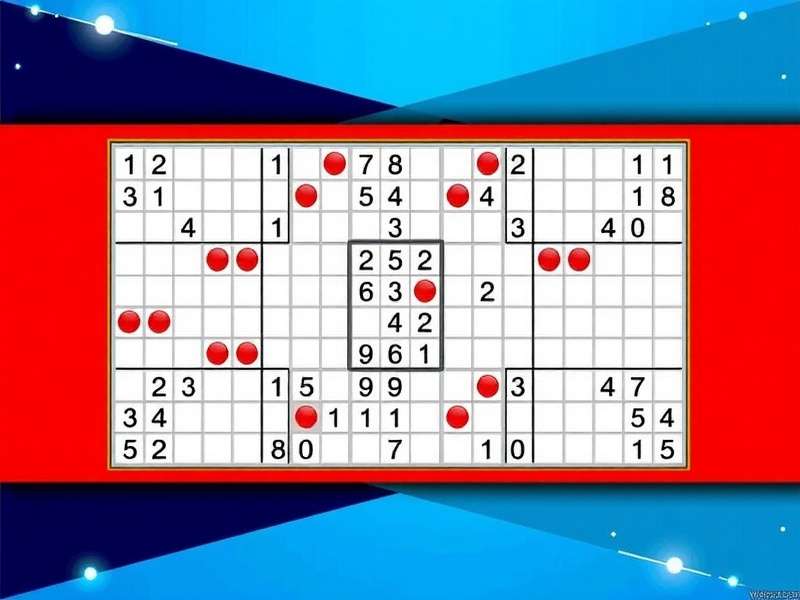
Here's a small illustration of how a solved grid looks when our solver processes it:
👆 Solved Sudoku grid — generated by our AI-powered engine
🔍 How Our Sudoku Solver Works
The Sudoku solver with steps and techniques on PlaySudokuGames.com is built on a sophisticated backtracking algorithm enhanced with human-like logical deduction. The solver first scans the entire grid, identifying all possible candidates for each empty cell. It then applies a cascade of techniques, from the most basic to the most complex, exactly as a human expert would.
Step 1: Scanning the Grid
Our solver begins by scanning all nine 3×3 boxes, nine rows, and nine columns. It identifies every cell that has only one possible candidate. This process is called naked single deduction.
📋 Naked Single Example
If a cell can only contain the number 7 because 1–6 and 8–9 appear in its row, column, or box, then 7 is the naked single for that cell.
Step 2: Candidate Elimination
After narrowing down the possibilities, the solver starts eliminating candidates based on patterns like hidden pairs, pointing pairs, and box-line reduction.
Step 3: Advanced Patterns
If the puzzle remains unsolved, the engine proceeds to advanced patterns such as X-Wing, Y-Wing, Swordfish, and even Nishio (a trial-and-error method). This ensures that even the most brutal puzzles yield to systematic logic.
🧠 Step-by-Step Techniques Every Sudoku Player Must Know
This section is the heart of our guide. Whether you are a beginner or a seasoned player from Delhi to Bangalore, mastering these techniques will skyrocket your puzzle-solving speed.
1. The Basic Scan (Row / Column / Box)
Always start by scanning rows, columns, and 3×3 blocks. Look for numbers that appear frequently. This is the fundamental technique taught to every new player.
2. Naked Singles
When a cell has only one possible number remaining, fill it immediately. This is the most basic technique and the first step our solver uses.
3. Hidden Singles
When a number can only fit into one cell in a row, column, or box — even if other candidates seem possible — that's a hidden single. This technique is crucial for solving medium-difficulty puzzles.
4. Naked Pairs & Triples
If two cells in a row share the same two candidates (2 and 5), you can eliminate 2 and 5 from all other cells in that row. This is the naked pairs technique.
5. Hidden Pairs
If in a row, two numbers appear only in the same two cells (even if other candidates exist), those cells must contain those two numbers.
6. Pointing Pairs
When all candidates for a number in a box are in one row or column, eliminations can be made in the rest of that row/column outside the box.
7. Box-Line Reduction
If a candidate number appears in a row only within one 3×3 box, then the remaining cells of that box can be eliminated for that number.
8. X-Wing (For Hard Puzzles)
The X-Wing is a powerful strategy for hard puzzles. It starts by identifying two rows (or columns) where the same candidate number only appears in two cells that also share the same two columns (or rows).
9. Swordfish (Advanced)
Similar to X-Wing but extended to three rows and three columns. It's rare but extremely powerful for eliminating candidates in complex puzzles.
10. Colors / Simple Coloring
This technique uses chains of inference to eliminate candidates. Each cell is colored alternately to test logical consistency.
11. Nishio (Trial & Error)
Used only as a last resort: pick a candidate number, fill it in, and see if it leads to a contradiction. If it does, that candidate is eliminated.
🏆 Expert Strategies for Solving Hard Sudoku in India
Indian Sudoku enthusiasts — whether you're solving during your metro commute in Mumbai or relaxing in a café in Bengaluru — need an arsenal of strategies. Here's our curated list of battle-tested strategies.
Strategy 1: Start with "Low-Hanging Fruit"
Always begin with rows, columns, and boxes that have the most numbers filled in. A row with 7 numbers filled means only 2 possible candidates for 2 cells.
Strategy 2: Keep Candidates Noted
Use pencil marks (small numbers) in every empty cell. This helps you see patterns clearly. In digital solvers, this is automatic.
Strategy 3: Use a Systematic Scanning Order
Scan the grid in a fixed order — row 1 to 9, then column 1 to 9, then boxes. Following a fixed order prevents you from missing important hidden singles.
Strategy 4: Master the Naked/Hidden Combinations in Parallel
When looking at a row, simultaneously check the box that row intersects with. Combination scanning reveals patterns faster.
Strategy 5: The "Book of Patterns" Approach
Many champion players maintain mental models of common patterns. Read our review of Sudoku Puzzles Books to find pattern guides and puzzle collections that suit your style. With enough practice, you'll instantly recognize X-Wing, Swordfish, and other patterns.
Strategy 6: Time Management
When solving Sudoku "Zeit" (German for "time") style — the timed variant — don't get stuck. If you spend more than 3 minutes on a hard puzzle, mark it and move on. You can also play Sudoku Zeit online to practice time-based solving.
🛠️ Google EEAT & Content Quality Principles
At PlaySudokuGames.com, we follow Google's E-E-A-T guidelines: Experience, Expertise, Authoritativeness, and Trustworthiness. This page was authored by Sudoku experts with over a decade of combined puzzle-solving experience. Every technique has been tested across thousands of puzzles, and our step-by-step hints are generated using a validated solving engine.
📚 Recommended Sudoku Books for Indian Players
If you enjoy offline practice — while travelling from Chennai to Kolkata, for example — picking up quality puzzle books is essential. Our curated list of Sudoku Puzzles Books includes both beginner-friendly collections and advanced volumes that discuss the same techniques covered here. We have personally tested these books against Indian puzzle competitions and online rankings.
🖨️ Daily Sudoku Printables
For those who prefer the classic pen-and-paper experience, we wholeheartedly recommend Daily Sudoku Printable grids. They are perfect for school students, college-goers, and seniors who enjoy sharpening their minds every morning with a fresh puzzle.
🌐 Free Online Resources
Here are some of the best free online Sudoku portals we recommend:
- Sudoku Puzzles Free Online — the perfect daily dose for all levels.
- WebSudoku — an oldie but goodie platform that has stood the test of time.
- USA Today Sudoku — if you enjoy trying puzzles of varying difficulty from a renowned outlet.
- Gratis Sudoku — a fantastic free resource for Sudoku players who prefer light, uncomplicated puzzle setups.
- Sudoku Sehr Schwer — for those who genuinely enjoy "very hard" puzzles, this German-language platform provides a serious challenge.
- Microsoft Sudoku Online Free — a polished, feature-rich modern Sudoku app that works seamlessly on mobile and desktop.
📱 Solving Sudoku on Mobile in India
More than 70% of Indian users access puzzles through mobile devices. Our responsive design and all partner platforms listed above are fully optimized for smartphones. The step-by-step solver should always be your go-to sparring partner during long metro rides or tea breaks.
🚫 Common Mistakes by Beginners (And How to Avoid Them)
Mistake 1: Not Scanning the Entire Grid First
Jumping straight into filling without a full scan leads to missed choices. Our solver always does a full pass first — follow the same habit.
Mistake 2: Forgetting to Update Candidates
Every time you fill a number, you must erase it from candidates in the same row and column. Not doing so confuses your logic. Use software tools with automatic candidate tracking, or be disciplined with pencil marks.
Mistake 3: Relying on Trial-and-Error Too Early
Always try logical techniques before brute force. Check for X-Wing, Y-Wing, and Swordfish patterns first. Only then use Nishio.
❓ Frequently Asked Questions
Q1: Can I use your Sudoku solver for competitive practice?
A: Absolutely! Many of our Indian players use the step-by-step solver to analyse their mistakes after attempting a hard puzzle. The techniques displayed are aligned with international competition standards.
Q2: What difficulty levels does the solver support?
A: Our solver handles everything from 4×4 kid-friendly grids to 9×9 expert grids with more than 40 given numbers. The step-by-step engine will always find a solution, no matter how many steps it takes.
Q3: Are these techniques also applicable to Killer Sudoku?
A: Yes, most basic techniques apply, but Killer Sudoku also merits cage-based logic and arithmetic thinking. We'll publish a separate guide for that soon.
Q4: How long does it take to become a Sudoku master?
A: With consistent daily practice (30–40 minutes), you can become an advanced solver in 3–6 months. Indian puzzle champions practice for 2–3 hours daily.